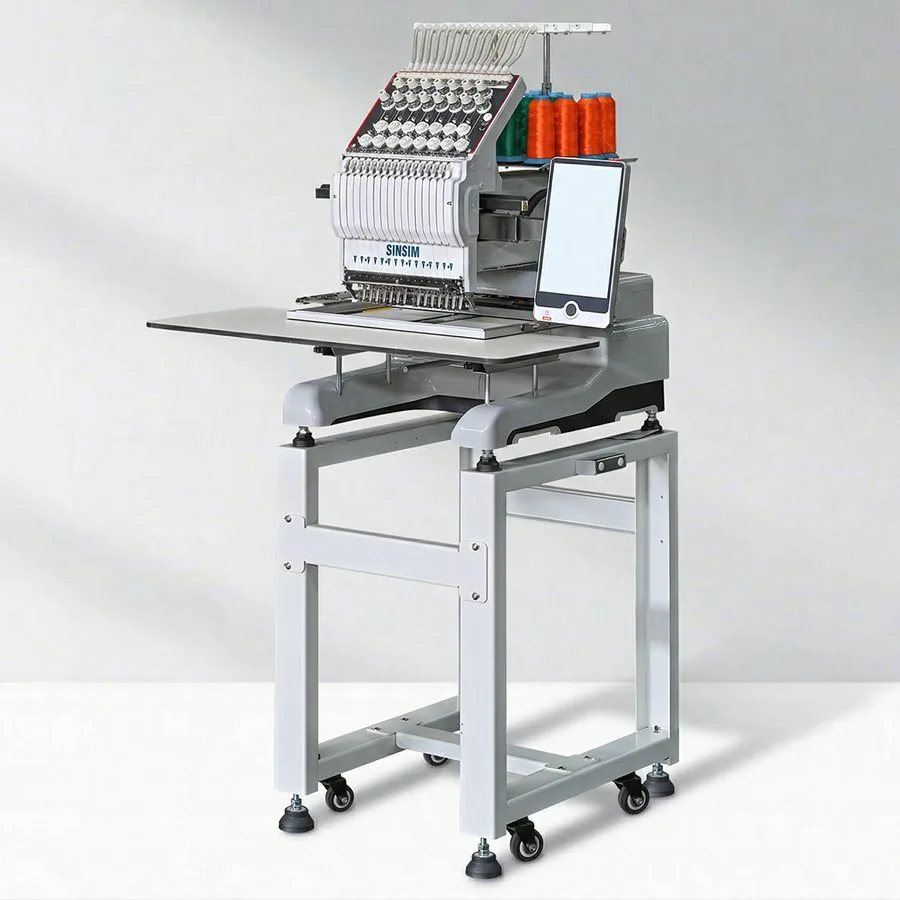
PEC Multi-Function Compact Embroidery Machine
One compact machine. Caps, garments, shoes, socks, bags.
One compact machine. Caps, garments, shoes, socks, bags.
The PEC series is built for fashion clothing stores, personalised embroidery businesses, home studios, school teaching and startups. A single machine handles flat, cap, garment, shoe, bag and sock embroidery — with quiet operation, a true-colour touchscreen and support for sequin, cording, bead, laser and easy-chenille devices.
Built for Real Production Conditions
- Small shuttle + no-buckle-thread technology for cleaner stitching
- One-touch hoop retraction and one-touch power-failure reset
- Projection technology with visual positioning and wireless transfer
- Quiet operation suited to retail and studio environments
- Optional accessories: tubular frame, magnetic frame, shoe frame, cap driver, tape frame and more
- Networking system support for multi-machine studios
Series Spec Summary
| Heads | 1 (PEC-HOME) / 1–4 (PEC-COMMERCIAL) |
|---|---|
| Needles | 12 / 15 |
| Max Speed | 1,200 RPM flat · 1,000 RPM cap |
| Embroidery Area | 400×240 mm up to 1200×700 mm by model |
| Machine Power | 230–400 W |
| XY Drive | Closed-loop stepping motor, suspension structure |
| Device Support | Sequin / Easy-Cording / Laser / Bead / Easy-Chenille |
| Presser Foot | Standard / ERED / Electronic |
| Design Formats | DST, DSB, EMB and more |
| Memory | 2 million stitches or 200 patterns |
| Hoop Support | Flat / Garment / Cap / Sock / Shoe |
| Languages | 13+ including English and Hindi-region support |
Configurations vary by model within the series. Request the full datasheet for model-level specifications.
Straight Answers Before You Spend
The PEC series is the machine most Indian embroidery businesses start with. It is a compact, single- or multi-head computerised machine that handles flat, cap, garment, shoe, bag and sock embroidery without changing machines — you swap the frame, not the equipment. That flexibility is the whole point: a retail customisation counter, a school teaching lab and a sampling department inside a larger factory all have the same requirement, which is to produce a small number of very different things well.
Buy this if
- Retail and custom-order shops embroidering finished caps, jackets, uniforms and bags
- New businesses testing demand before committing to a production line
- Sampling and approval departments inside larger garment factories
- Schools, institutes and training centres teaching machine embroidery
- Established workshops adding a second machine for short-run or urgent jobs
Look elsewhere if
- Continuous output above roughly a few hundred pieces a day — a compact machine becomes the bottleneck long before its build quality does
- Wide home-textile panels such as bedsheets and curtains, which need the large-format HC series
- Continuous lace yardage, which is what the LS/LB lace machines exist for
What Buyers Wish They'd Asked
Power and siting
Rated between 230 W and 400 W depending on head count, so it runs on an ordinary single-phase supply — no three-phase connection or industrial wiring required. Allow roughly 2 × 1.5 m including the stand and room for the operator to hoop comfortably at the side.
Where the time actually goes
Machine speed is rarely the constraint on a compact machine. Hooping and de-hooping is, and it is entirely operator-dependent. Budget for good frames and proper training before you budget for more RPM — the difference between a trained and untrained operator on the same machine is routinely a factor of two.
Needles decide colours, not quality
12 or 15 needles determines how many thread colours a design can use before someone has to rethread. If your work is corporate logos in three colours, 12 is ample. If you take on decorative or ethnic work with layered colour, 15 saves real time every day.
Devices you can add later
Sequin, easy-cording, bead, laser-cutting and easy-chenille devices can be fitted to extend what the machine produces. Buying the base machine now and adding a device when a customer actually asks for that finish is usually the better order of spending.
How to specify it
Within the series, the decision is head count against floor space. PEC-HOME is a single head for counters and studios. PEC-COMMERCIAL runs one to four heads: two heads roughly double throughput on repeat work while still fitting a normal room, and four heads starts to behave like a small production line and should be planned as one. If your orders are mostly single custom pieces, extra heads sit idle — spend the money on frames and a second operator instead.
Try the machine selectorThe Machine Is Half of It
Every Sinsim PRI installation includes the following as standard. If a quote you are comparing does not, you are not comparing like with like.
Transport to your premises and placement on your floor, including access assessment before dispatch.
Levelling, calibration and a test run on your own fabric and design file — the machine is signed off producing your work, not a showroom sample.
On-site training for your operators and maintenance staff at no additional cost, with refresher sessions available through your regional service hub.
Cover on electronics, motors and control systems with extended coverage on the frame. Consumables such as needles, hooks and thread guides are excluded. Exact terms are confirmed on your quotation.
Fast-moving parts stocked regionally for 48-hour delivery in serviced cities; less common parts ship from central stock within 3–5 working days.
Introductions to NBFC and equipment-financing partners for EMI and lease structures, arranged around your order size.
Related Machines
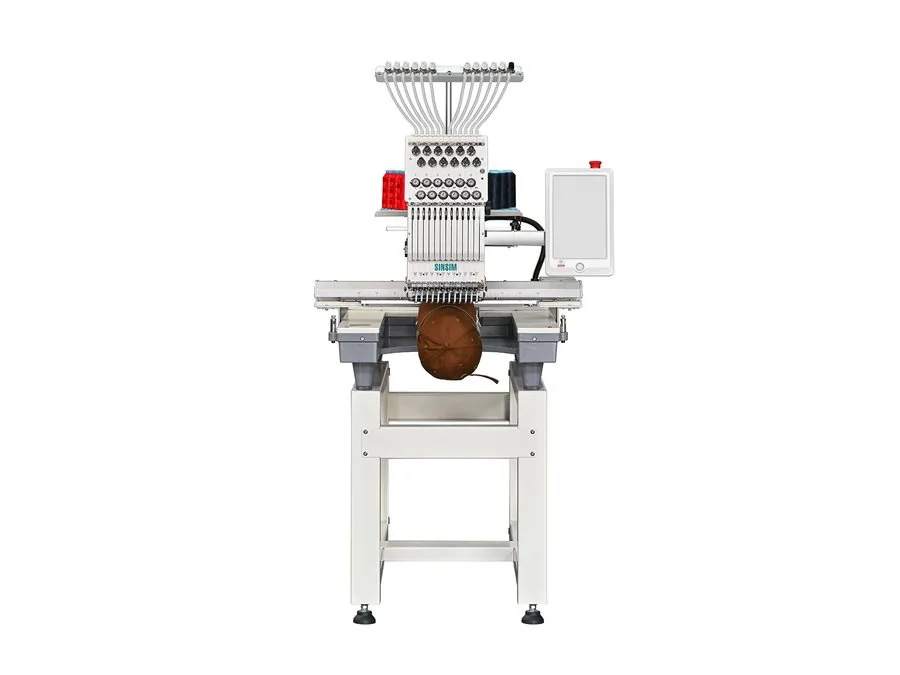
PD SERIES
Multi-purpose minitype machine for flat, garment, cap, sock and shoe embroidery applications.
Enquire Now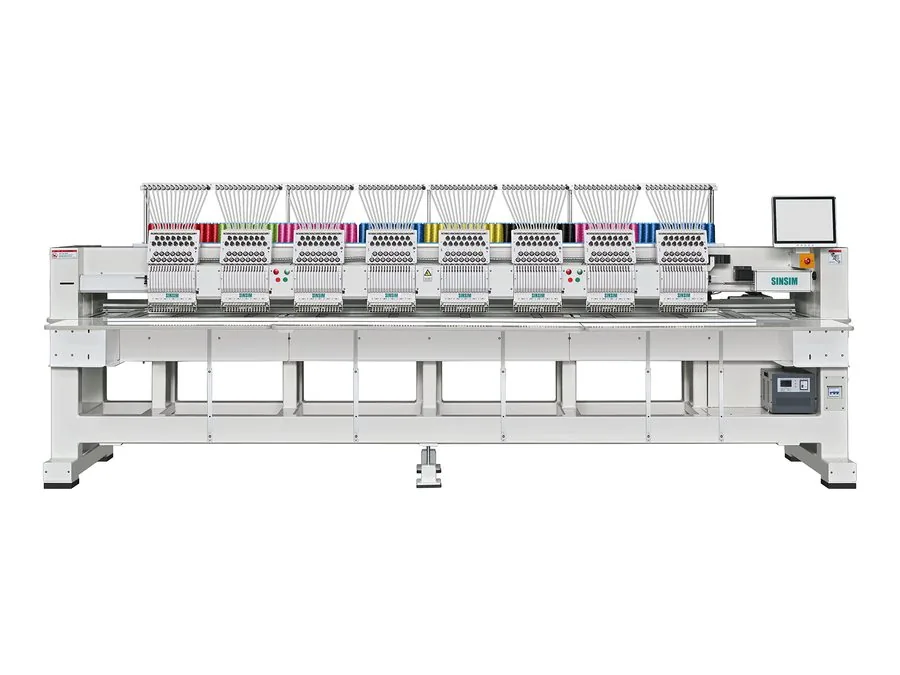
PEJ SERIES
Versatile minitype platform supporting flat, garment, cap, sock and shoe embroidery with optional devices.
Enquire Now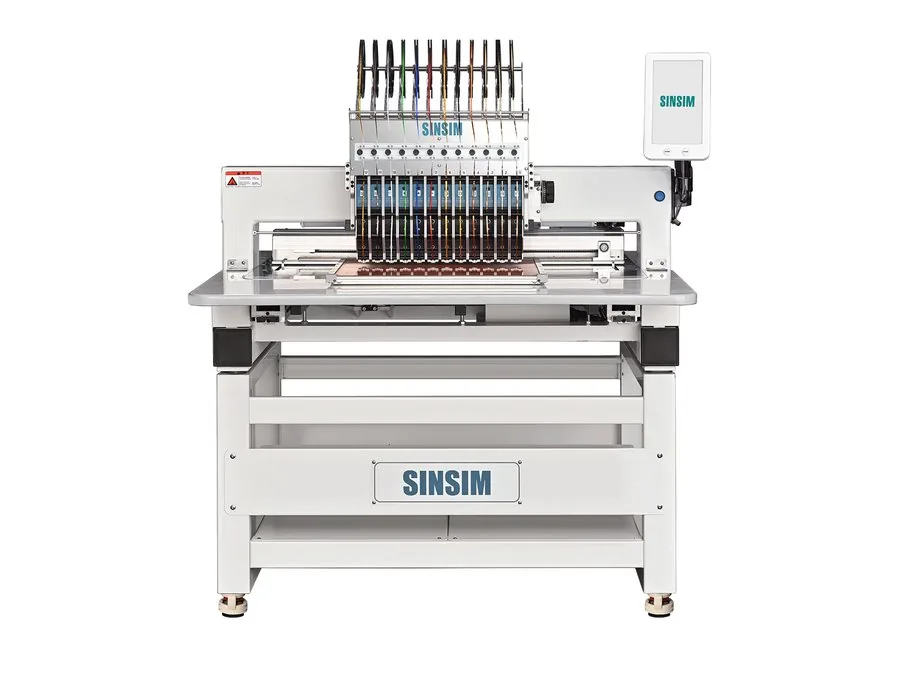
AUTOMATIC SEQUIN PUNCH PRESS
Automatic sequin punch press machine for in-house sequin production and specialty embellishment.
Enquire NowGet a Formal Quote for the PEC Series
Share your production volume and fabric mix — we’ll confirm configuration, pricing and delivery timeline within one business day.